- admin
- March 29, 2026
- No Comments
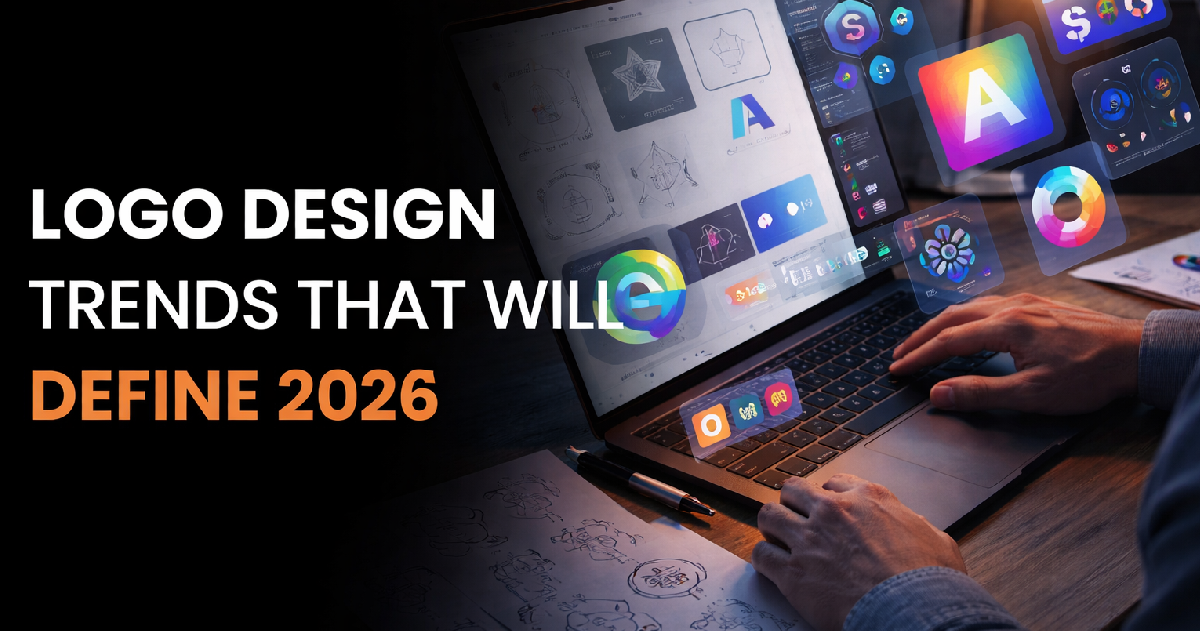
The visual landscape shifts every year — but 2026 is bringing a more dramatic rethinking of what a logo should do, feel, and communicate. Here are the definitive trends your brand needs to understand.
1. Human-Made Imperfection
In 2026, AI-generated design is everywhere — and consumers know it. The market response has been a surge in demand for logos that feel visibly, proudly human-made. Wobbly hand-lettered type, deliberate ink bleeds, brush textures, and imperfect geometry are not just accepted — they are actively sought after. These logos communicate authenticity in a way that pixel-perfect vector art simply cannot.
2. Kinetic Identity Systems
The static logo is becoming a baseline expectation. In 2026, leading brands are building kinetic identity systems — a family of animations and motion behaviors that extend the logo into movement across every digital touchpoint. This is not a simple GIF — it is a choreographed language of motion: reveal animations, responsive morphing, micro-interaction states, and animated bumpers for Reels and Shorts.
3. Hyper-Minimal Wordmarks
Custom letterforms
Bespoke type designed from scratch — not available on any font platform. The ultimate uniqueness signal.
Ligature-first design
Letters that connect and interact, making the wordmark read as both word and image simultaneously.
Variable weight type
Wordmarks using variable fonts that shift weight subtly across contexts — heavier on dark, lighter on white.
Negative kerning
Letters pushed tightly together, creating a dense, confident typographic mass that commands space.
4. Adaptive / Responsive Logo Systems
One-size-fits-all logos are a liability in 2026. Winning brands deploy adaptive logo systems — sets of related marks that intelligently adjust based on where they appear. Full horizontal lockup on desktop, simplified mark on mobile, icon-only for social, custom favicon for the browser tab. Each version purpose-built, not squeezed from the original.
5. Earthy, Organic Color Palettes
Bold, saturated palettes are giving way to muted, earthy tones: terracotta, warm sage, dusty rose, ochre, clay, and deep forest green. This shift reflects consumer psychology — in an overstimulated world, brands using calming natural colors feel more trustworthy and approachable. Premium brands are abandoning vibrant for considered.
6. Subtle 3D and Dimensional Depth
Flat design ruled the 2010s. In 2026, restrained dimensionality is back — soft shadows, subtle extrusion, and layered depth that gives logos physical presence without looking like a video game button. Think depth with intelligence: three-dimensionality that adds gravitas without overwhelming.
7. Heritage Revival with Modern Execution
Brands with history lean into it. Brands without history manufacture it. 2026 is the year of the heritage revival — shield emblems, vintage badge formats, serif-heavy lockups, distressed textures — executed with contemporary precision. The result: simultaneously timeless and fresh.
8. Dark Mode-Native Logo Design
With the majority of mobile users in dark mode and more OS defaults going dark, logos designed only for white backgrounds are increasingly problematic. 2026 brand standards require dark mode variants — marks specifically optimized for dark backgrounds, not just inverted versions. A real design challenge that separates modern brand thinking from outdated practice.
9. Logos Built Around Conceptual Depth
In a market flooded with visually competent but meaningless logos, conceptual depth cuts through. A logo built around a specific idea — hidden imagery, a purposeful metaphor, a visual nod to the brand’s founding story — creates a mark that people discover, share, and remember. The story behind the logo becomes a brand asset as valuable as the logo itself.
10. AI-Augmented, Human-Directed Design
The best agencies in 2026 use AI for rapid concept exploration, then apply deep human judgment to develop and refine the work. AI handles iteration volume; the designer handles meaning. The result: faster timelines and broader creative exploration — without sacrificing depth or strategic fit.